
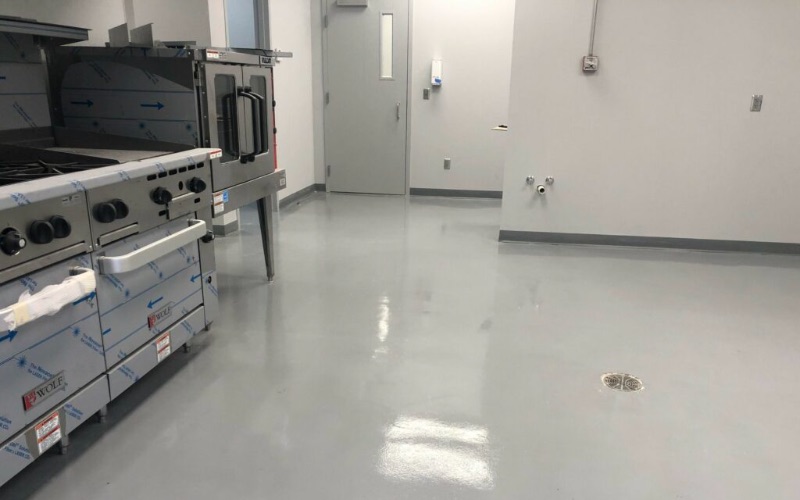
Commercial kitchens face intense daily demands — heavy foot traffic, spills, high temperatures, and constant cleaning. Choosing the right flooring is crucial to ensure safety, hygiene, and long-term performance. Commercial kitchen epoxy flooring offers a seamless, durable, and slip-resistant solution that stands up to these challenges while looking professional and polished.
In this guide, we’ll explore the benefits of commercial kitchen epoxy flooring, cost considerations, maintenance tips, and why it’s the preferred choice for restaurants, hotels, catering facilities, and food production plants.
Why Choose Commercial Kitchen Epoxy Flooring?
Commercial kitchen epoxy flooring and epoxy flooring commercial kitchen solutions combine durability with easy maintenance. Unlike traditional tile or vinyl, epoxy creates a smooth, non-porous surface that resists moisture, stains, and bacterial growth. This is essential in a food preparation environment where hygiene standards are critical.
Epoxy is also slip-resistant, reducing the risk of accidents in busy kitchens. Its chemical resistance means spills from oils, acids, and cleaning agents won’t damage the surface. Additionally, epoxy can be customized with color-coded zones for safety or design purposes, ensuring both functionality and style. The seamless finish eliminates grout lines, which are notorious for harboring dirt and bacteria, making cleaning quicker and more effective.
Benefits at a glance:
- Long-lasting and resistant to wear
- Easy to clean and maintain
- Customizable colors and textures
- Meets health and safety regulations
- Resistant to chemicals, moisture, and stains
With proper installation and maintenance, epoxy flooring can last 10–15 years, making it a cost-effective investment.
Commercial Kitchen Epoxy Flooring Cost
The commercial kitchen epoxy flooring cost depends on factors such as the size of the space, surface preparation requirements, and chosen epoxy type. On average, you can expect to pay between $8 and $12 per square foot for professional installation.
High-performance options with additional safety features, like enhanced slip resistance or antimicrobial coatings, may cost more. However, these upgrades often pay for themselves in reduced maintenance, longer lifespan, and fewer workplace accidents. When budgeting, also consider potential downtime during installation and plan accordingly to minimize business disruptions.
When considering commercial kitchen flooring epoxy options, keep in mind that investing in quality materials and skilled installation will ensure the flooring withstands years of heavy use.
Comparing Commercial Kitchen Flooring Options
When selecting flooring for your kitchen, it’s important to compare epoxy to other common options like tile, vinyl, and concrete. Below is a detailed comparison of features, costs, and benefits.
Before making a decision, here’s how commercial kitchen epoxy flooring stacks up against popular alternatives:
| Flooring Type | Average Cost per Sq. Ft. | Lifespan | Maintenance Level | Safety Features |
| Epoxy Flooring | $8 – $12 | 10-15 years | Low | Slip-resistant, antimicrobial option |
| Ceramic Tile | $5 – $10 | 5-10 years | Moderate | Slip-resistant if textured |
| Vinyl Sheet Flooring | $3 – $7 | 5-8 years | Moderate | Limited slip resistance |
| Polished Concrete | $6 – $12 | 20+ years | Low | Slip-resistant coatings available |
Epoxy stands out for its seamless surface, which prevents food particles and liquids from seeping into cracks, reducing the risk of bacterial contamination.
Maintenance Tips for Epoxy Flooring in Commercial Kitchens
Maintaining your epoxy commercial kitchen flooring is straightforward. Daily sweeping and mopping with mild detergents will keep the surface clean. Avoid harsh, abrasive cleaners that could damage the coating. Using soft-bristled brushes and microfiber mops can help preserve the finish.
For kitchens that operate long hours, schedule deep cleans weekly to maintain optimal hygiene. Promptly address spills to prevent slips and ensure compliance with health codes. Implementing a scheduled inspection routine will help identify any signs of wear early, allowing for timely repairs.
Re-coating every 7–10 years can extend the life of your flooring and keep it looking like new. By following these steps, you’ll maximize your investment and maintain a safe, attractive work environment.
Local Insights: Epoxy Flooring Rogers Service Areas
Epoxy Flooring Rogers proudly serves a wide range of Arkansas communities, including Rogers, Springdale, Bentonville, Bella Vista, Lowell, and Fort Smith.
-
Rogers: Known for its historic charm, Rogers offers attractions like the Pinnacle Hills Promenade Arts Festival and the Rogers Historical Museum, making it a vibrant area for local restaurants.
-
Springdale: Located in the Ozark Mountains, Springdale hosts major events like Bikes Blues and BBQ, attracting large crowds to its food venues.
-
Bentonville: Home to the Crystal Bridges Museum of American Art, this city blends culture with commerce, ideal for high-end dining spots.
-
Bella Vista: Famous for its outdoor recreation and scenic lakes, Bella Vista restaurants cater to both residents and tourists.
-
Lowell: Offers a close-knit community atmosphere, perfect for small, family-owned food businesses.
-
Fort Smith: The second-largest city in Arkansas, Fort Smith’s bustling downtown is filled with dining opportunities.
Wherever you are in these regions, our epoxy flooring for commercial kitchens ensures your space meets the highest standards of safety and performance.
FAQ: Commercial Kitchen Epoxy Flooring
Q1: How long does commercial kitchen epoxy flooring last? With proper maintenance, it can last 10–15 years, even in high-traffic kitchens. Regular cleaning, timely repairs, and occasional re-coating help maximize its lifespan. Choosing a high-quality epoxy blend and professional installation further extends durability.
Q2: Is epoxy safe for commercial kitchens? Yes, epoxy is slip-resistant and can include antimicrobial coatings to meet health regulations. It provides a seamless surface that minimizes tripping hazards and supports a cleaner working environment. These properties make it a reliable choice for restaurants, bakeries, and industrial kitchens.
Q3: Can epoxy flooring handle high heat? Epoxy is heat-resistant and can withstand typical kitchen conditions without damage. However, prolonged exposure to extreme heat sources should be avoided to maintain the coating’s integrity. Protective mats can be used under ovens or fryers for additional safety.
Q4: How much does it cost per square foot? On average, between $8 and $12 per square foot, depending on customization and prep work. Additional features like decorative flakes or anti-slip additives may slightly increase the price but provide long-term benefits.
Q5: Is epoxy better than tile for kitchens? Yes, epoxy’s seamless surface prevents bacterial growth, unlike grout lines in tile. It also offers greater resistance to chemicals and wear, reducing the need for frequent repairs. Epoxy’s modern look can also enhance the kitchen’s appearance while boosting functionality.
Commercial kitchen epoxy flooring is the gold standard for durability, hygiene, and safety in demanding food service environments. Its seamless, non-porous design prevents bacterial growth, while its slip-resistant surface helps reduce accidents.
Whether you operate a small café in Bella Vista or a large restaurant in Bentonville, investing in epoxy flooring ensures your kitchen meets health codes, impresses staff and customers, and stands the test of time. With expert installation from Epoxy Flooring Rogers, you’ll get a high-quality solution tailored to your business’s needs.
Call Epoxy Flooring Rogers today to schedule a free consultation and take the first step toward a safer, more efficient kitchen.
Recent Comments